

In the high-stakes world of contemporary real estate, velocity is the ultimate currency. Whether you are managing residential brokerages or commercial property enterprises, the speed at which a transaction moves from an initial offer to a finalized agreement directly correlates with its ultimate profitability. Yet, for many organizations, the documentation lifecycle remains a formidable hurdle. Despite the broad transition to digital tools, many still rely on disjointed methods—like manual email forwarding—that introduce friction and risk into the transaction ecosystem.
The most notorious bottleneck in this lifecycle is the “signature chase”: the laborious process of routing legally binding contracts through a disparate chain of buyers, sellers, legal representatives, and escrow agents. When momentum stalls because a document is stuck in an inbox, deals die. To dismantle these inefficiencies, forward-thinking real estate organizations are turning to advanced document generation solutions on Salesforce.
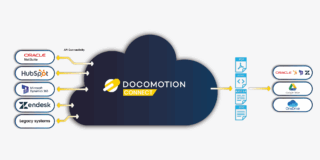
As a specialized Salesforce ISV solution with interfaces embedded directly into Salesforce screens and workflows, Docomotion operationalizes contracts through automated multi-signer workflows without ever requiring users to leave their CRM environment.
Signature Paradigms: Parallel vs. Sequential Signing
To optimize real estate operations, it is vital to distinguish between different digital signing logics.
- Parallel Signing: In this configuration, all signatories receive the document at once and can sign independently. This is ideal for maximum velocity in non-hierarchical agreements, such as standard Non-Disclosure Agreements (NDAs) for commercial property viewers.
- Sequential Signing: This paradigm enforces a strict, linear order. Signer A must execute their portion before Signer B is granted access. In real estate, this is often a structural necessity. It ensures that subsequent parties are presented with an immutable data set, such as finalized counter-offer amounts, preventing premature execution and sequencing errors.
Why Order Matters: The Power of Sequential Workflows
In real estate, who signs when isn’t just about preference—it’s about protection. Sequential signing ensures your documents move in a logical, legally sound order, acting as a built-in safeguard for every deal.
Choreographing the Perfect Sale
Closing a sale involves a delicate handoff between parties. With automated workflows, the “baton” is passed instantly: once the buyer signs, the seller is notified. This ensures the seller never accidentally signs an outdated offer. Once everyone is finished, the finalized contract is automatically routed to the escrow agent—no manual follow-up required.
Clear Logic for Leasing & Guarantors
Residential leasing requires a strict order to stay compliant. Docomotion ensures the tenant signs first, followed by the guarantor, and finally the landlord. This sequence protects the landlord, ensuring financial backing is legally committed before they ever bind themselves to a new lease.
Simplified Governance for Commercial Deals
For complex commercial transactions, sequential signing acts as your internal gatekeeper. It ensures that contracts pass through legal and partner reviews before reaching the client. Whether it’s a high-stakes commercial lease or a judicial sale, you get a single, auditable digital chain that proves authority and compliance at every step.
The Docomotion Advantage: Embedded Salesforce Document Automation
Docomotion transforms your document lifecycle by embedding intelligent workflows directly within your Salesforce environment. Because it’s built as a specialized ISV tool, you get the power of advanced automation with the familiarity of your existing CRM.
Seamless Performance, No External Latency
Unlike third-party apps that bounce your sensitive data back and forth to external services – causing delays and security risks – Docomotion is fully embedded in Salesforce. This keeps Salesforce as your absolute “single source of truth.” You get superior data security and real-time status tracking without ever leaving your operational dashboard.
The 10-Signer Hierarchy and Dynamic Logic
Need to route a contract through a long list of stakeholders? Docomotion supports custom hierarchies for up to 10 distinct signers. Using “Active Step Number” logic, you can control exactly what each person sees. For example: a buyer at Step 1 only sees the offer fields, while the seller’s internal metrics stay hidden until the document reaches Step 2. It’s smart, secure, and completely automated.
Interactive Fields and Effortless Compliance
A signature is rarely the end of the story. Docomotion uses interactive fillable fields to collect IDs, references, and other vital data during the signing process. Thanks to bi-directional sync, this information is pushed back into Salesforce instantly – eliminating manual entry and keeping your records 100% accurate.
Furthermore, the PDF Layer feature allows you to upload standardized government forms or legally vetted PDFs and overlay dynamic Salesforce data on top. This ensures that the exact, legally required visual structure of a document is permanently preserved while automation handles the population.
Quantitative Economics: The Impact on Your Bottom Line
The shift to automated, sequential multi-signer workflows yields measurable strategic impact:
- Accelerated Deal Velocity: Manual document creation can consume up to 75% of a transaction coordinator’s day. Automation reduces turnaround times from days to minutes, achieving up to 40% faster contract execution cycles.
- Unprecedented Accuracy: By enforcing mandatory fields and linear progression, real estate firms report an 85% reduction in contractual errors.
- Exponential Scalability: Automation allows existing teams to handle significantly larger transaction volumes without increasing administrative headcount. Leading firms have saved upwards of 500 hours of labor per month by automating high-volume document generation.
Conclusion
In an industry where “time kills deals,” the traditional signature chase is a systemic vulnerability. The transition to automated multi-signer workflows is no longer an optional upgrade; it is an indispensable operational imperative. By leveraging the power of Docomotion and Salesforce, real estate professionals can ensure ironclad compliance, boost client satisfaction, and reclaim hundreds of hours to focus on what truly matters: closing the next deal.